


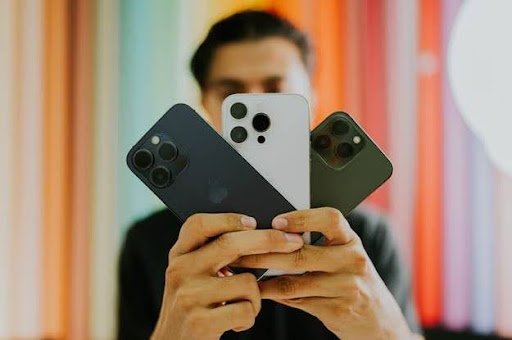
The smartphones are currently one of the most significant commodities in the present world that we use for almost everything-whether it is to communicate, entertain ourselves, shop or even to work. In the last 10 years or so, the smartphones sector has witnessed a drastic transformation from being a premium-only niche category to a common must-have product utilized by billions worldwide. The world of smartphone tech is entering into a new phase as newer technology gets developed and consumers demand higher specifications for a modest increase.
In this post, we take a deep look into the current state of the global smart-phone industry, major trends driving growth, as well as some significant developments that can be expected for both vendors as well as consumers.
Global Smartphones Market: A Snapshot
The global smartphones market stood at around 1,368.70 million units in the year 2025 and is anticipated to further expand at a CAGR of almost 3.50 percent over the forecast period of 2026-2035 to hit nearly 1,930.69 million units at the end of the forecast period, the market report by Expert Market Research mentioned. The sustained increase is a consequence of an already-maturing market where first-time purchases have begun to decline as device replacement and upgrades constitute the larger portion of demand, with the emerging economies providing significant room for growth and adoption.
Although the growth rate has slowed considerably since the boom in the early days of smartphones, because of the market size the increase of even a few single-digit percent results in the hundreds of millions additional sold units annually. That is the why this segment remains the biggest and the most monitored among the consumer electronics divisions of a manufacturer.
Key Drivers Fueling Market Growth
1. Expansion of 5G Networks
As 5G network deployments continue around the world, this is motivating customers to change their mobile phones in order to reap the advantages of higher speeds, minimal latency, as well as enhanced connections required by many data intensive applications like streaming, mobile gaming and video calling.
2. Rising Demand for AI-Powered Features
AI as a differentiating factor in the smartphones market The increasing presence of Artificial intelligence is proving to be a significant difference between the smartphones available in the market today. Whether it’s AI enabled computational photography, translation tools, smart battery optimization or personal assistants, the role of AI is a crucial purchase deciding element for consumers nowadays.
3. Growing Middle-Class Population in Emerging Markets
Areas such as the Asia Pacific, Africa and certain segments of Latin America have increasing disposable income and penetration of smartphones leading to significant demands for entry-level to mid-range phones.
4. Increasing Replacement and Upgrade Cycles
The ever increasing ubiquity of smart phones has made consumers happy to invest in replacement smart phones due to enhanced cameras, increased battery life or improved performance keeping even stagnant demand buoyant
5. E-commerce and Online Retail Growth
The explosion of online shopping platforms has made smart devices more affordable, enable businesses to sell direct-to-customer, provide competitive pricing and even conduct exclusive, online-only launches of some model.
Regional Insights
Largest of all the major regions for the global market, Asia Pacific remains strong thanks to a huge consumer base, solid in-house supply chain with significant local manufacturing capabilities in nations like China, India and across the various Southeast Asian countries. The other two important markets are North America and Europe where device replacement rate is high, and a huge number of customers prefer top-notch devices and flagship offerings, while also displaying firm brand allegiance. Growing at an impressive pace, the emerging countries of the Middle East, Africa, and Latin America are rapidly emerging as the go-to markets where the smartphone adoption rate still needs a massive hike.
Key Trends Shaping the Smartphones Market
- As costs decrease, foldable and flexible displays are being transitioning from exclusive luxury items towards mainstream applications.
- Photography will be powered with advanced multi-camera technology including advanced, sharper images and better low-light results due to improved hardware and AI based camera features that are becoming a standard for phones.
- Manufacturers are slowly catching onto sustainability and are looking into recycling materials, having software update for more years and designing products with modules that are easy to repair.
- Android’s open-source structure has resulted in its huge share of global market penetration with varied devices available whereas iOS’s power in market remains with expensive models.
- Strong growth is noted for mid-range phones that fall in between budget-oriented ones and their high-end counterparts.
Challenges Facing the Industry
Growth may be possible, but not without its challenges. The maturity of the developed world market for smartphones has somewhat stalled demand for new handsets and therefore, a growing reliance on the upgrade cycle is being imposed on the manufacturers. Limited access to some of the components necessary to build the phone, rising commodity prices for many of these, and ongoing international trade tensions also threaten supply and price increases. Competition among manufacturers remains high, threatening margins especially in the price-sensitive low and middle segments of the market.
What Lies Ahead for the Smartphones Market
Going forward, smartphones industry is anticipated to be driven by continued innovation rather than sales volumes. Some of the features that may be instrumental in the form of the next generation smartphones, or for that matter its devices – include AI capabilities, 5G and subsequently 6G, foldable devices, seamless integration of all devices into one ecosystem, among others. Companies that succeed in a blending of innovation, economy, sustainability and the best customer service would no doubt win popularity for the worldwide public forever.
Final Thoughts
Smartphones, at a worldwide level, are moving to a stable, mature growth trajectory. That growth won’t come from the sheer velocity of initial new adopters; it will be more tempered, thanks to tech breakthroughs, increased connectivity, changing consumer desires and a global marketplace in flux. Given all of this, the sector is still one of the most active, and the one consumer (and tech watchers) will want to keep an eye on for quite some time. According to Expert Market Research, the sector continues to evolve with ongoing innovation and shifting consumer demand.
Frequently Asked Questions (FAQs)
What is the current size of the global smartphones market?
Global smartphones market was approximately 1,368.70 million units in 2025 and is projected to reach nearly 1,930.69 million units by 2035 with a CAGR of about 3.50%.
What is the dominant region in the smartphones market?
The global smartphone market is led by Asia Pacific region, due to factors such as extensive consumer base, advanced manufacturing capacities and speedy telecom expansion.
What are the Key Growth Drivers in the Smartphones market?
Key growth drivers for the market are an increasing rate of adoption of the 5G network, growing popularity of artificial intelligence features and increasing population of middle-class people in emerging countries and shorter replacement cycles of mobile devices.
What is the dominant operating system on smart phone around the world?
By its open sourced feature and ability to support many price segments, Android wins the majority of the worldwide operating system market share while iOS stays strongly in high-end market.
Future Of the Market Of smartphones: what factors will determine the changes?
The foldable screens, developments of cameras, increase of the capabilities of artificial intelligence technologies, responsible manufacturing, and the widespread of 5G, as well as the introduction of 6G, are key factors to consider.