


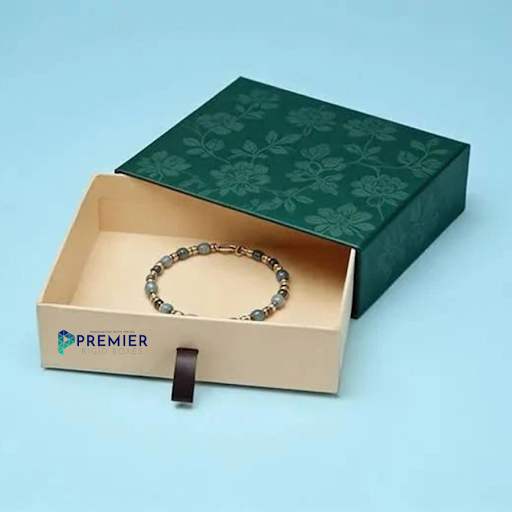
A chunky cuff and a delicate chain bracelet have almost nothing in common once you start thinking about how to box them. One needs room and structure. The other needs to be held so tightly it can’t shift a single millimeter, or it’ll end up tangled around itself by the time the customer opens the lid. Treat them the same way in packaging, and you’ll end up with one bracelet that rattles around loose and another that barely fits; neither is a good first impression.
This is the part a lot of jewelry brands skip past. Bracelets get lumped together as “small jewelry,” one box size handles the whole category, and problems only show up later in reviews that mention tangled chains or scratched finishes.
Why Bracelets Are Trickier Than They Look
Rings are simple — round, small, one shape to design around. Bracelets aren’t. They come in wildly different forms, and each one has its own failure point if the packaging doesn’t account for it.
- Chain bracelets tangle if there’s any extra room to move around in
- Bangles and cuffs need rigid support, or they can warp, especially thinner metal ones
- Beaded bracelets are prone to thread stress if they’re folded or compressed into a space too small
- Charm bracelets need room for the charms without letting them knock against each other or scratch the chain
- Leather and cord bracelets can crease or develop a permanent bend if coiled too tightly for too long
One box style simply can’t do all of that well. Not without some kind of internal structure doing the actual work.
What Good Bracelet Packaging Needs to Solve
Movement control. This is the big one. A bracelet that can shift even slightly inside its box will tangle, scratch against the packaging, or rub against other pieces if it’s part of a multi-item set.
Shape retention. Bangles and cuffs hold their form as long as nothing’s pressing against them unevenly. Packaging that squeezes or forces a curved piece into a flat space will eventually distort it.
Surface protection. Anything plated, polished, or finished is vulnerable to fine scratches — often from rubbing against the inside of its own box, not from external damage.
Presentation. Bracelets are given as gifts more often than almost any other jewelry category. The box needs to open in a way that makes the piece look intentional, not like it was dropped in and shut.
This is really the argument for Custom Bracelet Boxes with Inserts, which are cut to the specific shape of the bracelet style, solving almost every problem on that list at once. A molded slot holds a bangle without pressure. A fitted channel keeps a chain from tangling. A raised platform showcases a charm bracelet without the charms colliding.
Matching Insert Style to Bracelet Type
| Bracelet Style | Insert Type Needed | Main Risk Without It |
| Chain / fine metal | Fitted channel or slot | Tangling, knotting |
| Bangle / cuff | Rigid molded holder | Warping, shape loss |
| Beaded | Padded flat bed | Thread stress, breakage |
| Charm bracelet | Raised center platform | Charms are scratching each other |
| Leather/cord | Gentle curved cradle | Creasing, permanent bend |
The insert is really doing more work than the outer box in most of these cases. The box protects from the outside. The insert is what keeps the bracelet itself intact.
A Few Design Details Worth Getting Right
- Insert material should match the bracelet’s finish sensitivity — anything plated or polished needs a soft, non-abrasive lining, not just a structural cutout
- Depth matters as much as width — a box too shallow will press down on a bangle every time the lid closes
- Velvet or suede inserts work well for premium pieces, while foam or molded pulp is often enough for mid-range or everyday jewelry
- Leave slightly more room for charm bracelets than you’d think — charms need space to sit flat, not stack on top of each other
Rigid boxes tend to be a better foundation for this kind of insert work, since they hold their shape under the insert without flexing. Manufacturers like Premier Rigid Boxes typically build the insert around the bracelet’s exact dimensions first, then size the outer box to that — rather than forcing a bracelet into a box that was really designed for rings or earrings.
Final Words
Bracelets aren’t a one-size category, even though packaging often treats them that way. A chain needs to be held still. A bangle needs to be held gently. A beaded piece needs to be left alone entirely rather than compressed. Getting the insert right for each style is less about looking premium and more about ensuring the bracelet that leaves the workshop is the same one that arrives at the door unscratched, untangled, and still the right shape.